Signed in as:
filler@godaddy.com

Elias S. and Nancy Gilly Parden with children:
Lonnie, Ollie, Ida, Alma (16 years old), Henry (Jim), Charlie, William, Irene, Floyd
E.S. (Bunk) Parden Family Reunion, 1940
Bethel Community, Coffeeville, AL
Baptism of Rojean Purvis
San Antonio, TX, September 1960
Baptism of Bill Purvis
San Antonio, TX, September 1960
Sarah's Brother "Uncle Jim" and second wife

On Alma’s side, the Parden family ancestry is traced back to the ancient Henderson line of Scotland, including Sir George Henderson and William Henderson of the Barons of Fordell, whose family held prominence in Fife during the 1400s. The Hendersons were known as loyal Scottish nobles, landowners, and influential figures during a formative period of Scotland’s history. Through generations, this proud heritage carried forward into the Parden family, connecting our family story to centuries of Scottish tradition, resilience, and honor.
The Clan Henderson Society describes the Henderson family as one of Scotland’s oldest Highland clans, with roots tracing back to the ancient Picts and several distinct family branches from regions such as Caithness, Glencoe, Fordell, and the Shetlands. In the early 16th century young Henry Gunn decided to separate himself from the constant fighting between the Gunn and Keith clans and his descendants emerged as the Henderson’s of Caithness. Traditionally known as the “MacEanruig” or “sons of Henry,” the Hendersons played important roles in Scottish history, including serving as pipers to the MacDonalds of Glencoe and contributing to the Presbyterian Covenant movement through Alexander Henderson. Over centuries, many Hendersons emigrated from Scotland to Ireland, North America, Australia, and beyond, becoming part of the wider Scottish diaspora while preserving their strong cultural heritage and clan identity.
Many Hendersons left Scotland during periods of political conflict, religious tension, and economic hardship, especially in the 1600s. Large numbers settled in Ulster in Northern Ireland as part of the Scottish migration encouraged by the British Crown, where they became part of the Protestant Scottish communities established there. Over time, these Scottish settlers and their descendants became known as the “Scotch-Irish” (or Scots-Irish), reflecting their Scottish ancestry and Irish residence. In the 1700s, many Scotch-Irish Henderson families emigrated again, this time to America, where they settled mainly in frontier regions such as Pennsylvania, Virginia, and the Appalachian backcountry, bringing with them strong traditions of independence, Presbyterian faith, and Scottish culture.

Henderson origins, on Joan Blaeu, Scotia Regnum (1654)
Fordell Castle is a historic 16th-century tower house located in Fife, Scotland, and long associated with the Henderson family of Fordell. Built on the site of an earlier fortress, the castle became the ancestral seat of the Hendersons after the lands were granted to them by King James IV in 1511. Over the centuries, the castle survived fires, wars, and periods of decline before being carefully restored into a private residence, preserving its connection to Scottish clan history and heritage. It is now the residence of Dr. Alistair Henderson.
In the mid-16th century, Mary, Queen of Scots, is said to have stayed here when Marion Scott, one of her ladies-in-waiting, married George Henderson, the laird.[
Birth: October 9, 1545
Death: December 12, 1611
Fordell Castle, Fife Scotland
This beautiful chapel also serves as the family crypt.

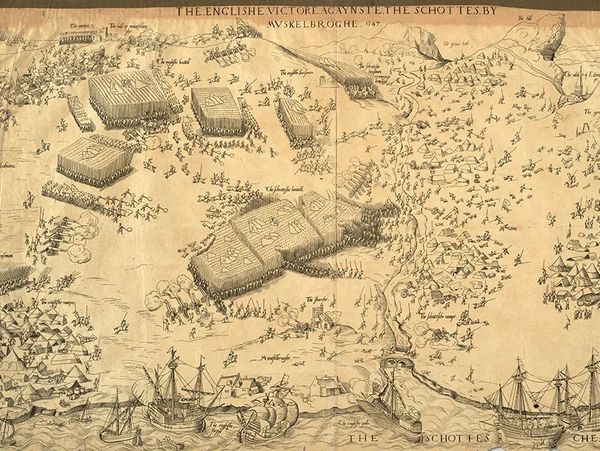
September 10, 1547
English Infantry : 13,000
Scottish Infantry: 20,500
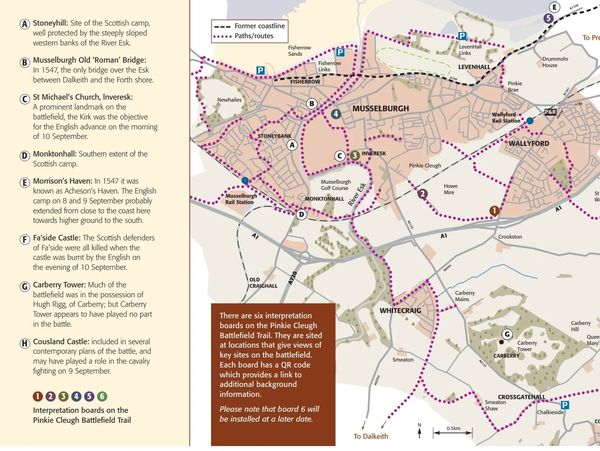
The Battle of Pinkie Cleugh was fought on September 10, 1547, near Musselburgh, Scotland, during the war known as the “Rough Wooing.” English forces led by the Duke of Somerset defeated a much larger Scottish army in one of the bloodiest battles ever fought on Scottish soil. The battle was sparked by England’s attempt to force a marriage alliance between the young Mary, Queen of Scots, and Prince Edward of England. The devastating defeat weakened Scotland politically and militarily, leaving a lasting impact on Scottish history.
Three ancestors including Lord William Henderson, his wife Lady Elizabeth Scott, and his father George Henderson were all killed on this day during the Battle of Pinkie Cleugh.